
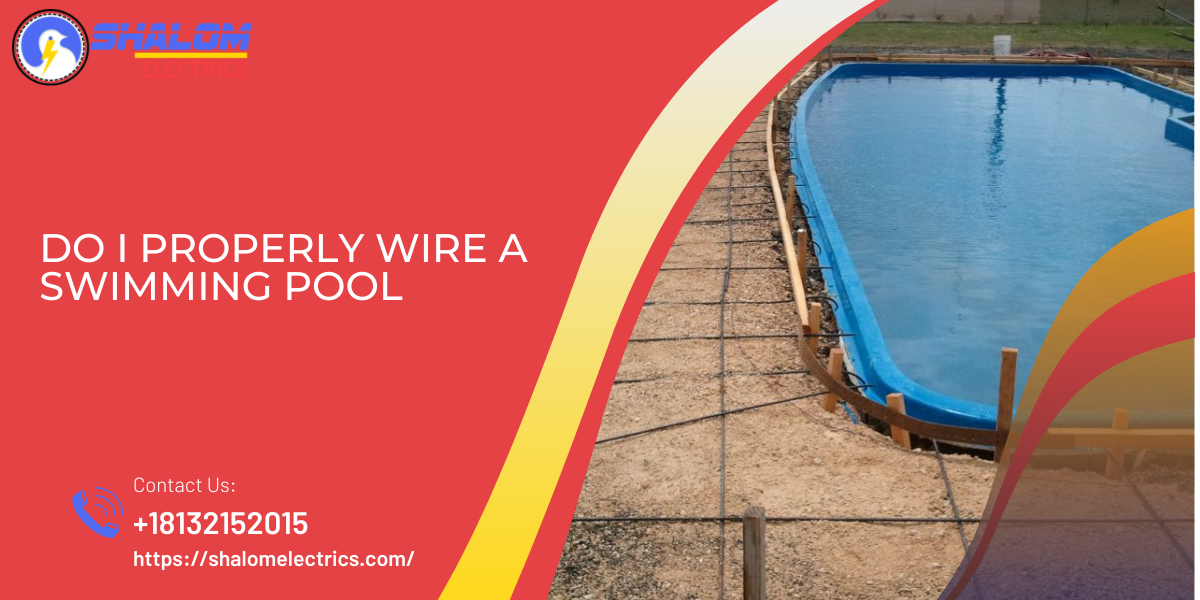
Proper swimming pool wiring is more than just turning on a pump and switching on a breaker. Pool areas consist of electricity, water, metal, lighting, pumps, outdoor conditions, and heaters and require careful planning and professional workmanship. We know how to do pool electrical work safely and in compliance with code, and we can help you with it at Shalom Electrics, LLC in Tampa Bay.
Appropriate GFCI protection, grounding/bonding, properly rated wiring methods, and suitable equipment connections are usually included in a properly designed system. Pool wiring can be different depending on the pool, equipment, location, and applicable electrical codes; therefore, a qualified electrician should review and install pool wiring.
Home Swimming Pool Wiring: What is Needed?
Correct swimming pool wiring cannot be achieved simply by wiring in a dedicated circuit. Pool electrical systems require the following measures: Ground fault protection, Proper grounding, proper wiring, and proper equipment distance from water. Each electrical item (such as a pump, heaters, lights, receptacles, etc.) will have specific requirements. Article 680 has been added to the NEC that covers electrical installations in connection with swimming pools and other aquatic facilities.
GFCI Protection is One of the Most Important Safety Features
One of the most crucial safety devices near pools is the GFCI. The purpose of GFCI devices is to trip out the power when it senses a ground fault that may cause electric shock.
Pool-associated equipment and receptacles may have certain GFCI requirements based on the type, voltage, location, and installation. For instance, NEC requirements specify that some pool pump circuits and receptacles in the vicinity of permanently installed pools must have GFCI protection.
While some may believe one GFCI device will protect all circuits, it is important for a licensed electrician to decide which ones need protection.
There Is A Difference Between Grounding And Bonding
The words grounding and bonding are often confused and misapplied and are different. Grounding is a means for fault current to flow. Bonding ties conductive parts together to minimize large voltage differences in the vicinity of the pool.
Conductive pool structures, metal fittings, equipment, and other pool components may all form the basis for bonding to the pool. The NEC has special bonding requirements to minimize voltage differences in the swimming pool area.
This is a key component that needs to be done correctly. Even modern equipment in the pool can create an unsafe electrical light installation if bonding is not considered.
Use Appropriate Wiring Methods
Pool areas may have moisture, chemicals, sunlight, and physical damage to electrical equipment and wiring. The type of wiring will vary according to the location and conditions. NEC requirements deal with wiring methods for pool-associated motors, such as installation of raceways and equipment ground conductors in areas of moisture, corrosion, or physical damage.
This is why generic extension cords or makeshift wiring isn’t suitable for permanent equipment in a pool.
Receptacle Location Matters
Poolside receptacles are not placed where they are easily accessible. The NEC has distance requirements for receptacles near permanently installed pools, such as receptacles for pool motors and other loads.
To minimize the risk of electrical equipment, electric cords, or appliances being located at a hazardous distance from the water. These distances are taken into account when planning for the installation and not during installation once the structure has been erected.
What About Pool Heaters and New Equipment?
A high-demand application, such as a pool heater, heat pump, or other similar unit, can drastically alter the electrical needs for an existing pool.
We recommend that the electrical capacity be evaluated before installing new equipment. These factors may all be used to determine the panel, existing circuits, conductor sizes, disconnecting means, GFCI protection, and equipment specifications.
The 2026 NEC also has new GFCI requirements that apply to some outdoor dwelling-unit outlets and illustrates the value of using the latest code requirements instead of following the older practices.
Frequently Asked Questions
Must A Pool Pump Have Its Own Circuit?
Often, yes. Depending upon the equipment and installation, a pool pump may require a special electrical requirement, and a dedicated branch circuit may be required. Qualifying pool pump circuits must be protected by a GFCI.
Are The Lights That I Want To Put In The Pool On My Existing Outdoor Circuit Compatible?
Not automatically. Each pool fixture, voltage, position, and power source will have its own special set of requirements. Before installing pool lights, the electrical circuit needs to be assessed by an electrician.
Is An Above-Ground Pool Required To Be Wired In Differently?
Yes. Storable pools require a specific set of requirements outlined in NEC Article 680, which encompass GFCI protection of applicable equipment and receptacles.
What Exactly Does Iool Bonding Mean, and Why Is It Important?
Pool bonding is used to help reduce dangerous voltage differences around the pool by physically bonding together conductive components that are qualified to be part of the pool. It’s not the same as just connecting electrical devices to the ground.
May A Pool Heater Be Added To The Existing Electrical Panel?
Probably, but the panel and service capacity need to be assessed first. Depending on the size and capability of the heater and the existing electrical system, a heater may need a dedicated circuit as well as extra electrical capacity.